Mode-shifting / code-switching

Beneath the immediate dismantling of aid agencies and slashing of multilateral budgets, the UN is facing deeper, existential questions from a fracturing international system. Messier, overlapping crises, aggressively competitive and confrontational foreign policy and trade, and shifting centres of power and coalitions of interest. Decades of assumptions about the dynamics between international security, trade and cooperation are unraveling in real time.
The UN can chase reforms like cost-effectiveness, digitalization, and decentralization, but this alone can't save it. A single, unifying global organization, trying to solve everything for everyone, seems doomed to a bland homogeneity, detached from a world that is leaving it behind.
If multilateral organizations can learn to navigate this disorder, they will need two things. One, be able to constantly adapt their operations to be effective across chaotic, compressed and diverging international systems: mode-shifting. Two, be able to intuitively adjust between different communication ‘logics’ to get results: code-switching.
Shocks to the System
Multilateralism has always been caught between chasing results and facilitating dialogue. The UN has usually managed to balance this under the logic of a P5 Security Council of superpowers on the one hand and the aspirational UN Charter on the other, into one mostly coherent system. This made sense in a bipolar world, which had clearly delineated security, humanitarian and developmental goals. It was made to work in a unipolar world, where trade, debt, public health, norms and environmental sustainability could be negotiated through global fora linked to mostly nationally-led planning. It hasn’t been perfect but, collectively, we’ve achieved a lot.
If we are now facing a multiplex future for international cooperation, the UN can’t just reposition itself along a familiar ‘realist-idealist’ spectrum. It can try continuously rebranding itself around PPT decks heralding new value generation, ecosystem intelligence, radical agility, digitally-enabled transformation, and decentralized platform-based delivery networks. But at some point the UN will have to face up to its own pathologies.
Instead of working against the political headwinds and playing catch up with international finance and consulting firms, the UN must find a way to crystalise and update how it already operates across different competing systems as well as different modes of communicating. There are many, but essentially come down to the two basic reasons we talk: to reach consensus and achieve results.
Most multilateral bodies have an aspirational logic that is consensus driven: an idealized version of a deliberative body working towards a holy grail of shared understanding. It aligns well with the UN's normative mandate, as well as the EU, and even the WTO: an ethos of legitimacy, inclusivity, and deliberative decision-making.
Actual institutionalization of these aspirations is extremely limited. Multilateral processes are driven by strategic bargaining, implicit agendas, bureaucratic path-dependencies, and national interests. Formal mechanisms for consultation or deliberation (GA debates, stakeholder consultations etc), are essentially ritualized performances. It’s incredibly difficult to retain any critical edge as they become more technocratic the closer they are to levers of power.
The UN will never fully embody an ideal of global consensus, but it still has the potential to bridge people, ideas and interests. Tension between consensus-based and results-based imperatives is unavoidable. The UN just needs to channel that tension productively.
Leaders in the UN can get stuck between championing big visions and chasing performance metrics. There’s an art to reading a room and seeing when to push for more resources for quick results, be ready to step back to build buy-in, bring another option to the table, or open up for frank feedback.
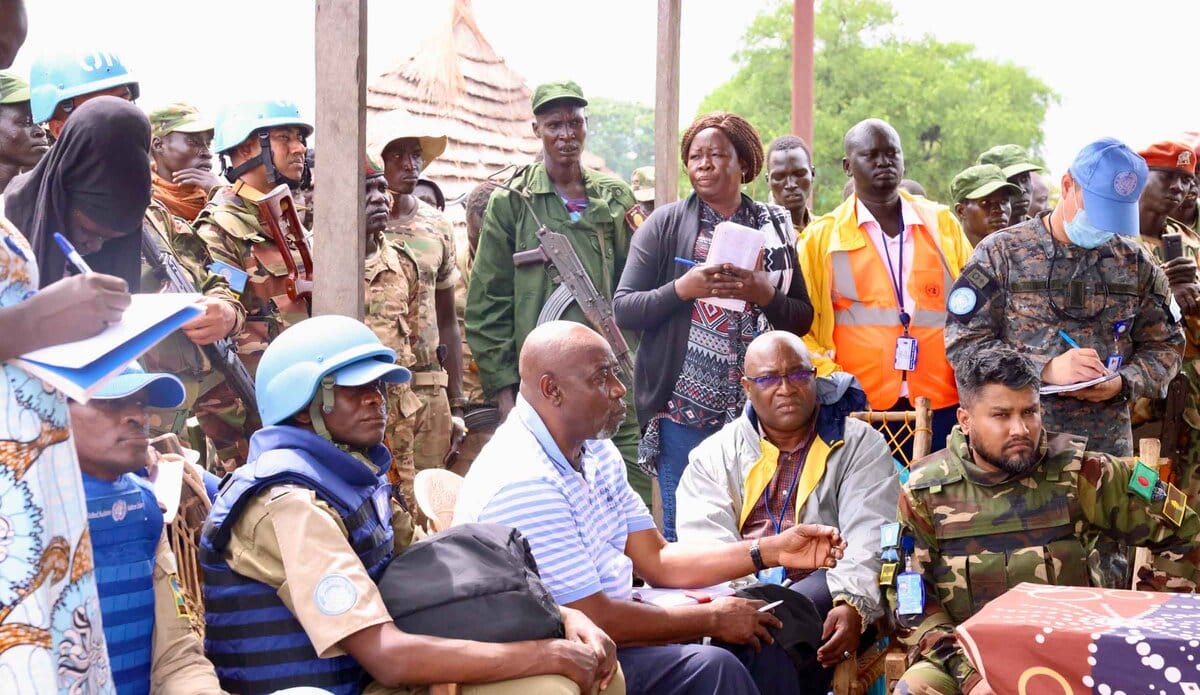
Most Resident Coordinators are struggling to command this convening authority, even between UN agencies, and create these bridges with wider government, donors and civil society. Balancing urgent needs with legitimising local input only works if the system backs them up—politically, financially, and culturally.
With fewer funds to go round, the UN System has been forced into a resources and narrow results pattern. RCs lean on their (paltry) budgetary power to coordinate their Country Teams where they can. They normally strike a balance between pure consensus-building and zero-sum competition. But UN agencies need better tools to channel this tension into its processes as it grapples with a converging international system fraught with trade wars, territorial claims, debt defaults, and mounting backlashes to human rights. To navigate in these overlapping and contested spaces, the UN should move issues between more open, flexible fora and more rigid, formalised structures, as required. Multistakeholder boards where differences of norms and interest get aired and negotiated; adaptive oversight systems that can identify when an overly instrumental approach is disrupting the local political economy, or when bureaucratising the venues for discussion have paralyzed action; and conflict-resolution pathways so funding decisions or strategy can be appealed. Handled well, formalising the difficult disagreements into a bureaucracy can help clarify how disagreements get resolved.
But systems often punish nuance. Slow-build solutions that arise out of consensus-building are abandoned, while immediate, quantifiable and translatable results are favoured. There are sensible attempts at make the existing systems more flexible: consolidated thematic windows for things like climate resilience, health and peacebuilding managed by multi-stakeholder boards and more adaptive management structures, moving away from narrower donor-driven trust funds and rigid project documents. These allow a single funding mechanism to support both quick interventions and more explorative, deliberative, iterative programmes.
Linking funding to broader objectives (improving child nutrition or local governance) rather than micromanaged line items within predetermined, donor designed log-frames might help local actors to pivot between direct, results-driven work (like distributing supplies) and more consensus-based efforts (like developing ways to anticipate and manage future crises). On the supply side, more diverse funders and coalition of partners can also more easily form and reform around areas of shared interest. There are promising experiments with adaptive contracts with built-in triggers for crises or shifting development priorities, and pooled flexible funds which can be accessed fast, with mechanisms to adapt in real-time to local interests, actual outcomes, and evolving situations.
But these attempts haven’t yet broken through to be transformational or scalable, mostly unable to overcome the political and bureaucratic barriers and incentive structures underpinning international cooperation. So long as success is still essentially measured in numeric outputs, the system will lean heavily into an instrumental logic. And while efforts to disrupt this are pegged to less tangible ‘participatory’ and ‘learning’ measures, we might never see a breakthrough. It’s hard to prove how a new system can work using the logic of the old one.
Embracing Conflict
The UN has attempted to protect its humanitarian and development work from political and security imperatives, with the idea that a strong RC can mediate between the national government and the broader international system, and a well-coordinated development and humanitarian system can efficiently channel the best support to where it’s needed, under this political cover.
UN agencies may now be forced to play overtly political roles as international power and negotiation filters out to more informal, issue-specific, irregular and ad hoc networks and coalitions, operating on more nakedly competitive rationale. If the UN can find the leaders, resources and political mandates to coherently operate across these spheres and levels, they can help this more complex arrangement of international spheres and levels to at least align.

Peacebuilding and political settlements, including through development and crisis response efforts, will need diplomatic, political resources from across the UN System and its Member States. The UN needs tools to navigate both the new fora, dimensions and dynamics of this multiplex international system to manage the drivers of conflict and the wider political economy, as well as parsing the competing forms of communication involved across these spaces.
Openly engaging in the political, diplomatic and security spheres will likely trigger an overhaul of the funding models multilateral agencies depend on. Governments will need to actively work with agencies to quickly construct some sort of resourcing network of global and national-level public goods, and agencies will need to find ways to be more open and confident in the value of their core overheads (i.e. employing career civil servants and technical experts). It will need investments in information and data systems, public advocacy, leveraging more political and diplomatic assets of its Member States, and creating far more flexible contracting and operational arrangements.
The biggest shift though is recognizing that the tension between the competing logics across these fractured layers of multilateralism won’t ever be resolved. Success is not eliminating that tension but building the capacity to handle it.
Reformation
Conflict isn’t opposed to peace, norms and sustainable development. The UN's core mandates look like end goals, but they’re better understood as ways to manage evolving conflict. Conflicting interests and ideas are inevitable. But channeling them is now harder in this more unpredictable and entangled international system.
The real pitfalls are getting stuck in a rigid framework or mindset, unable to keep up with shifting centres of power, and fragmenting networks and institutions. The UN has historically been able to code-switch effectively: deliberate to build legitimacy, deliver results to prove their relevance. But, facing its own mandate and financial crises, the UN seems paralysed in its bureaucratic patterns and the logic of the fading international order, struggling to equip its institutions to handle the rejection of the norms and values its upheld and tried to operate on for decades. All parts of the UN system will now need to learn to shift their modes of operating across unfamiliar dimensions of international cooperation, security, trade etc. while simultaneously being able to code-switch between the underlying communicative logic needed for that moment.
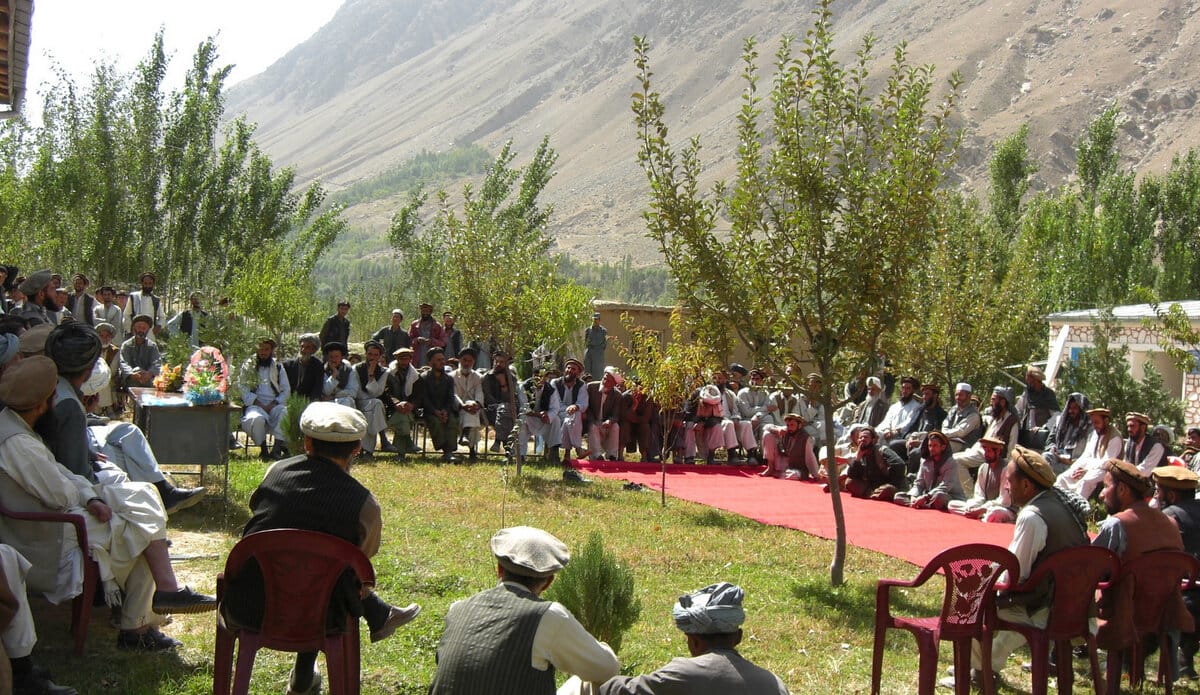
Building up the human skills and technical infrastructure to support this will need new coalitions of governments and other partners to make urgent, sometimes unpopular changes, and bold, often experimental, investments – organised outside the established channels.
The UN can reemerge as a legitimate forum and effective instrument for managing conflicting interests. It may need to be able to look beyond universal agreements and global efforts at times, towards smaller institutions and narrower, temporary coalitions, which can better navigate these arenas of international relations which, once clearly defined, are now crashing in on each other.
The challenge for the UN isn’t choosing to either champion norms or chase investment. By going back to the point of its formation, keeping what works and adding the means to do its job after this particular historical turn, the UN can have its future back.