The B Word
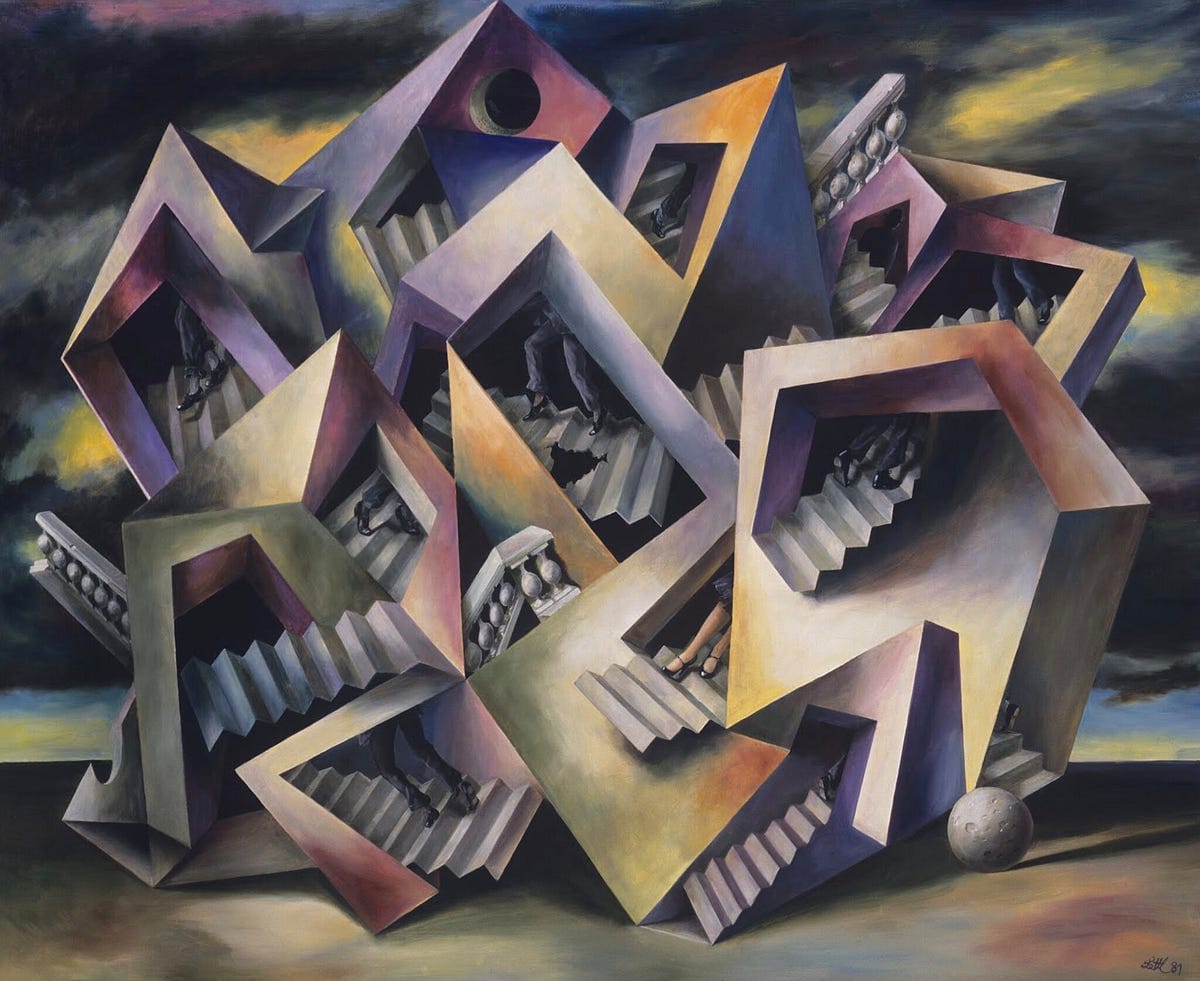
Bureaucracies seem perpetually caught between Kafkan-Orwellian nightmare and gridlocked, inefficient paper-pushing.
The UN's top-heavy bureaus and departments are derided and ridiculed, often fairly. But when efficiency becomes the dominant story, we risk weakening the very functions that make a complex bureaucracy work: coordination, neutrality, and shared purpose.
Not all friction is failure. And efficiency is only helpful if it helps the system do what it’s actually for.
Blame the Stage, Blame the Actor
Calls to cut UN bureaucracy often say as much about Members as performance. The UN System is too often treated like an independent actor when it's function is to be a stage, hiding Members' actions behind a perception of bureaucratic autonomy. But where the UN System is mandated to act, Members treat the bureaucracy as a political stage, to perform out the values and interests they are projecting into the world.
They tend to target functions that are regulative and redistributive, not that cost the most or deliver the least. And they rarely acknowledge the real reason multilateral systems work the way they do: they’re designed to manage complexity and balance geopolitical interests, not to move fast or please everyone all the time.
Inefficient or Complex
It’s true the UN is often slow and infuriating to navigate. HR rules are rigid, procurement can be clunky, and there seem to be few managers willing to manage or decision makers willing to decide. But the loudest complaints about inefficiency often come from member states that resist the very reforms that would streamline operations. Or that flood the system with earmarked funding and parallel priorities, making coordination harder.to navigate. HR rules are rigid, procurement can be clunky, and there seem to be few managers willing to manage or decision makers willing to decide. But the loudest complaints about inefficiency often come from member states that resist the very reforms that would streamline operations. Or that flood the system with earmarked funding and parallel priorities, making coordination harder.
What is called efficiency is also as a way to shrink the UN’s mandates. Criticizing process becomes a way to challenge legitimacy, without having to openly oppose the values behind it.
This isn’t new. The UN’s been through cycles of reform and retrenchment for decades. In the ‘80s and ‘90s, budget cuts were used to curb its normative role. The early 2000s brought more coordinated development action, but also more managerialism. Since the financial crisis, austerity logic has returned—flat budgets, more earmarking, pressure to deliver more with less.
Musk's blood letting of the US government treated complexity as inefficiency so he could dismantle regulative, normative and distributive systems, including USAID. Cost-cutting usually fails to produce better governance: complex systems don’t run well on simplified metrics.
What Bureaucracy Actually Does
But when the UN works well it works across modes of operating: diplomatic, humanitarian, normative, technical. Its bureaucracy is what allows it to operate across these modes at once. To slow down when needed. To open political space. To stay neutral. To adapt and act.
That kind of flexibility doesn’t look efficient on paper. But it’s what makes the system functional in practice. Some friction is by design. If this capacity for adaptability was accounted for as a form of R&D, by comparison many sectors spend 15-30% of their overall revenues to ensure adaptability - would that be considered efficient by these standards?
When we strip bureaucracy down too far, or judge it only by speed and cost, we risk removing the mechanisms that keep the system balanced and responsive across these different settings.
Escaping the Efficiency of Zero
This brings us to today. The Secretary-General and Guy Ryder are pushing for deep cost reductions across the UN. This may demonstrate a sort of performative discipline, it could win some political capital and trust to protect core mandates in a tough funding environment.
But there’s a risk. If cuts are too broad or too reactive, they reinforce the idea that bureaucracy is intrinsically the problem, rather than part of the system’s strength. If the story becomes “the UN is bloated and finally getting cleaned up,” it gets harder to defend the mandates that matter most when they come under pressure next time and get stripped for parts.
The UN needs to get better at how it works. Faster processes, shared systems, clearer accountability. But efficiency still needs a purpose. Reform has to enhance the things that make the UN worth having in the first place: its ability to coordinate across divides, connect new spaces for cooperation, defend spaces for thornier conversation and deal making, and speak for shared principles, not just shared tasks.