A new challenge to Washington's independence?
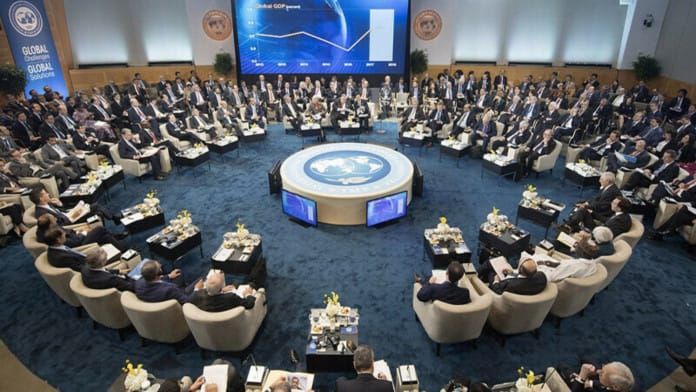
On 3 February 2025 the UN committee negotiating a new framework convention on international tax cooperation met in New York for its organizational session. Jonathan Shrier, the acting US representative to the Economic and Social Council, told delegates that the US did not plan to take part any further and would oppose whatever the process produced, ('We reject the very nature of these discussions'), and invited other delegations to leave too. None did, and the US delegation walked out alone, two weeks after the executive order pulling the US out of the OECD's global minimum tax deal. The walkout could be seen as just another of the Trump administration's exits..
The statement reflects a US position held since 15 November 1947, when the agreements formally connecting the IMF and the World Bank to the UN came into force. Article I of the Fund's agreement describes it as a specialized agency, and then adds that the Fund "is, and is required to function as, an independent international organization". The clause came out of the negotiation stronger than it went in, and the Bank's otherwise identical agreement has an extra article protecting its loan process. What the agreements actually set up is just the process to liaise: each organisation attends the other's meetings without a vote, and they consult and exchange information. The IMF's official historian has recorded that the major creditor countries have always held the Fund's independence from the wider UN membership as essential.
In 1979 Algeria proposed bringing the IMF under the authority of the UN General Assembly, and the Non-Aligned summit in Havana endorsed the idea that September. On 14 December the GA adopted resolution 34/138 by consensus, deciding to launch a round of global negotiations covering raw materials, energy, trade, development, money and finance, to be run within the UN system with the GA in the central role. The special session convened for the purpose in 1980 could not agree on the ground rules, and the negotiations never actually started. The Fund, its historian has recorded, took note of the discussions, was never asked to do anything specific, and made no response. By the time heads of state met at Cancún in 1981, the US briefing papers set out the agreed position: no return to talks under 34/138 unless the existing texts were set aside. Indira Gandhi kept pressing, at Cancún and again at the Assembly in 1983, and the idea was eventually dropped.
The G-24, the developing-country caucus on monetary and finance questions, produced its own Program of Action on international monetary reform that same autumn, and put it through the Development Committee, the joint IMF and World Bank ministerial body, rather than through the Assembly. Even the reformers, in other words, took their agenda to the venue where votes are weighted by each country's financial stake, because that was where anything could actually be decided. Five days after 34/138 the Assembly did pass a resolution on international monetary reform, 34/216, with every industrial country voting against or abstaining, and nothing came of it. The same attention went into the Fund's own publications. In 1987 the US Executive Director, Charles Dallara, had two things edited out of the World Economic Outlook before it appeared: wording suggesting that some countries' debts had grown past the point where they could realistically be repaid, and a reference to the possibility of an organised international way of dealing with those debts. The IMF's own history records the episode in a footnote.
On 11 December 1987 the Assembly adopted resolution 42/198, on international cooperation over the debt crisis. Only the United States voted against. Nothing followed, because a GA resolution cannot oblige the IMF, Bank or any creditor government to do anything. The creditor countries could afford to lose votes like this one, and they've lost them fairly regularly.
The current reform conversation treats all of this as inherited design. António Guterres has called the international financial architecture "outdated, dysfunctional and unjust", and the proposals packaged for the 2024 Summit of the Future and the Sevilla outcome document work from the same starting point: institutions built in 1944 for a different world, waiting to be brought up to date. Set against the record, that starting point does not hold up especially well. The separation of monetary authority from universal membership has been re-decided in every confrontation since 1947, most recently by governments still in office, and the reform proposals may keep failing because they treat as a design problem something the major creditors have gone on actively defending.
The tax convention is the same contest playing out again, but the first one the creditor states have not managed to keep off the UN's negotiating agenda. The push has been African Group work from the start, with Nigeria introducing the text and Egypt's Ramy Youssef chairing the negotiating committee. The Assembly set the negotiation up in late 2024 by 125 votes to 9, the 9 being Argentina plus the 8 countries that had voted against the negotiating mandate in August: Australia, Canada, Israel, Japan, New Zealand, the Republic of Korea, the United Kingdom and the United States. The US called the vote rather than let the text pass by consensus, and the European Union abstained after failing to get consensus decision-making written into the rules, which puts the European position a long way from the American one. The fifth negotiating session convenes on 3 August, working toward a treaty text in 2027. Every earlier defence of the separation was run from inside a venue the creditors controlled or could safely lose: the Fund's own board, the Development Committee, or the GA whose resolutions did not bind anyone. This time it is being run from the critical, multilateral New York, even with participation ended and the outcomes rejected in advance. That has not been tried before, and nothing in the previous 78 years indicates whether it can work.