The variable geometry of building peace
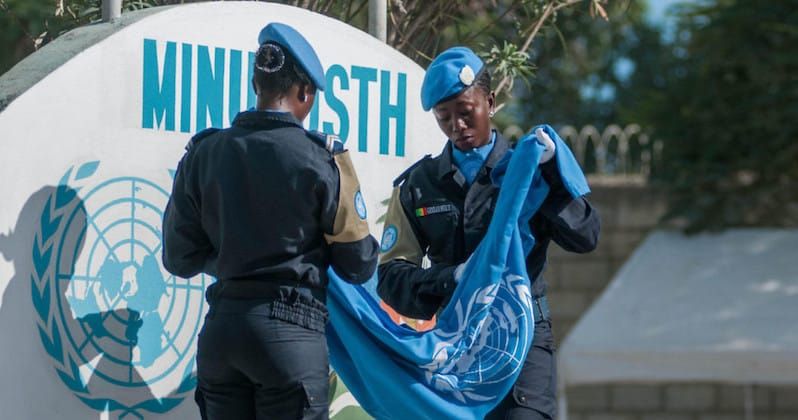
Mark Carney and Alexander Stubb's essay in The Economist argues that the answer to the postwar global order coming apart is small purpose-built coalitions around a shared interest, issue by issue, rather than around one institution everyone belongs to. They call it 'variable geometry', and point to the countries backing Ukraine, the G7's work on critical minerals, and the stabilisation forces in Gaza and Haiti. Three of these are places where capable governments pool effort around something they already agree on.
But a peace transition requires the slow work getting a state that cannot hold itself together to the point where it can, and what the postwar period seems to show is that what's most helpful is a steady and impartial presence kept up over years. That is not something coalitions of interested governments are well set up to provide in place of a body like the UN. Peace operations is the fourth case on their list, and it is the one where coalitions have already started doing the UN's job instead of adding to it.
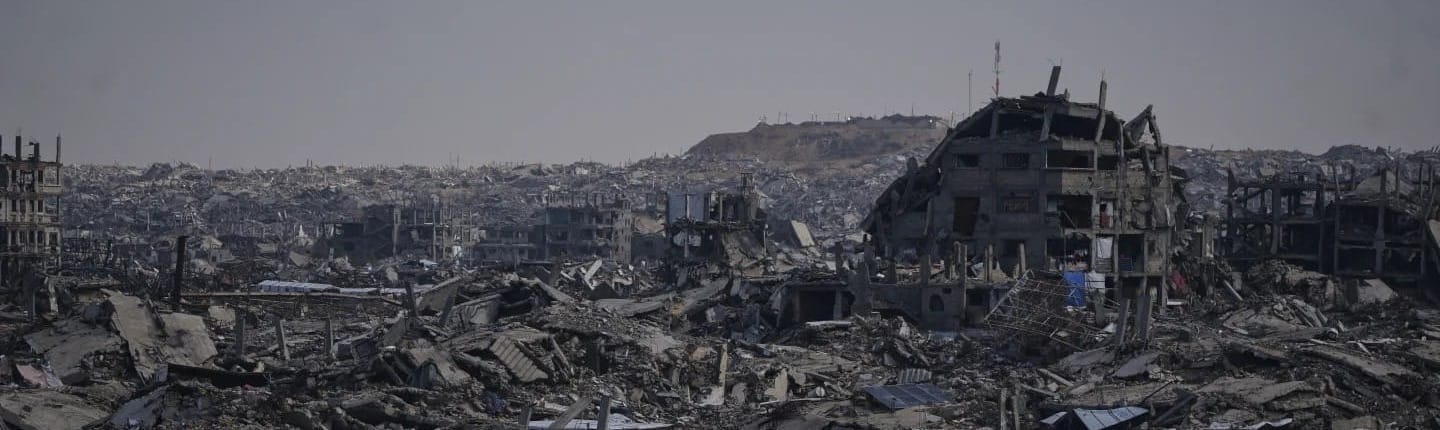
The peace field has had both mini- and multilateral models running in tandem for a while now. In December 2023 the Security Council agreed a resolution, 2719, that let African Union missions it authorises draw up to 3/4 of their budget from the UN's regular assessed dues (paid and overseen collectively by member states). The first time anyone tried to use it, for the African Union force in Somalia, the US blocked it, and has since said it will oppose UN logistical support for that mission past the end of 2026. Over the same stretch the Council authorised the coalition forces Carney and Stubb hold up as the model. The one in Haiti is running below the strength it was authorised for, and the one for Gaza, authorised by the Council last November, still had no troops on the ground eight months later. The collectively funded option was stopped, while the coalition option was authorised and then left underpowered.
None of that lines up with what the research on peacekeeping actually shows. Virginia Page Fortna's studies find that when UN peacekeepers are present, the chance of a civil war starting up again falls a long way, by somewhere between 75 and 85%. Other work has estimated that if peacekeeping were scaled up substantially, the amount of conflict going on around the world would run about 2/3 lower than it would with no peacekeeping at all. The evidence on non-UN forces is much thinner, and what there is points mostly to them helping when they back up a UN mission rather than when they take its place. The model being cut back, then, is the one with the actual track record behind it. The alternatives are cheaper because they do less, and less is what is being asked of them.
The research is also fairly specific about what does the work, and it turns out not to be the number of soldiers. Barbara Walter's finding is that what makes a peace last is the substance of the deal the troops are there to protect, whether people have a real say in it, whether there is some accountability, and whether institutions get built that the population has reason to trust. Bilateral and coalition deals find this harder to build in. The Russian force that took over from the UN mission in Mali provides firepower without traditional state/peace-building conditions to it. The stabilisation coalitions put a lid on the violence without much behind it in the way of a longer political settlement. They move faster and cost less.
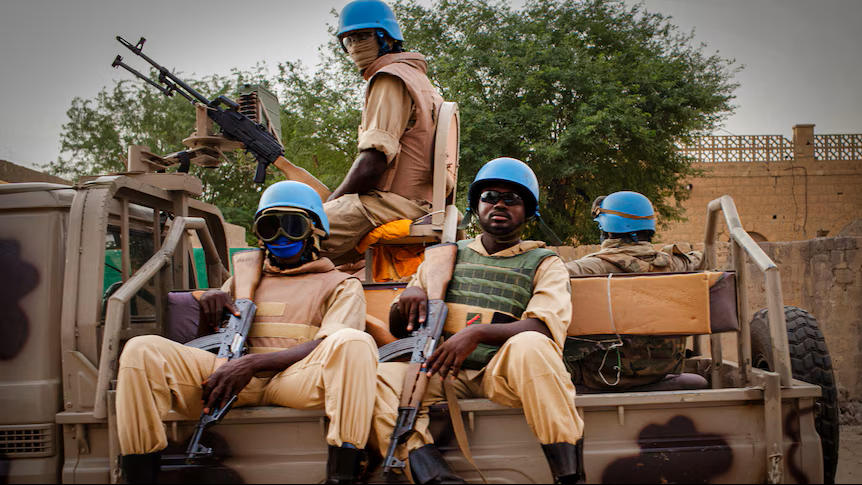
The development and peacebuilding work that is supposed to turn a ceasefire into something more lasting is also being defunded. When member states finished the 2025 review of the UN's peacebuilding architecture in November, they backed away from the funding commitment they had signed up to in 2020 and again in the Pact for the Future, and they took out the wording that tied peacebuilding to climate and to sustainable development, which several countries had fought to keep in. So a mission gets wound down, not because it has finished its job but because the money dried up, and the development side that was meant to catch the handover has quietly lost its own funding promise at the same moment. The governance work, the slow building of institutions that let a society keep itself steady, is the first thing to go when the budget tightens. The Charter treated security and development as a single job, and in practice they are now being pulled apart from both ends.
It would be tempting to read all this as an old idea from the 1990s finally being retired, except that the UN has already brought the idea up to date. Guterres's New Agenda for Peace, back in 2023, started from the premise that the post-Cold War period was over and the world had gone multipolar, and it rebuilt the case for prevention on that footing. It treats development and the prevention of conflict as two halves of the same thing, and it puts national governments, not outsiders (or former colonial powers), in the lead. So it is the updated version of the idea that member states are now walking away from.
Now budgets produce decisions essentially on autopilot and changing how the UN shows up in fragile places. The US is moving its money from the multilateral model to this minilateral alternative, holding back UN dues, blocking the collective financing for AU missions, pushing for the end of the mission in Lebanon, and putting its weight behind the coalition forces that move into the space. Russia and a group of other states have pared the peacebuilding language down to national ownership on request only, which in practice hands any government that wants the UN gone a respectable reason to say so. Governments from Mali to Sudan to the Congo have told the missions to leave and turned instead to security providers who ask less of them. The countries that tried to keep development written into the peace text, and the agencies that actually do that work, were outvoted.
The answer you hear from people defending the system is that it has been through worse and come out the other side, that these institutions are tougher than any one crisis makes them look. That is fair enough. But there is a difference between an institution surviving and an institution still being where things happen, and a body can hold on to its building and its meetings and its letterhead for years after the real work has moved somewhere else.
Outside peacebuilding earned a name for turning up with other people's priorities in tow, and national ownership was the right correction. But a handover that happens only because the money ran out leaves a country with neither real ownership nor a working transition, just a hole where the support used to be. And the countries keeping the missions staffed are not the ones cutting the funding. Every one of the ten biggest contributors of troops to UN operations is in the global South, holding open a system that the powers who authorise it are backing out of.
Carney and Stubb are right that coalitions of the willing are becoming the main way things get done, but they skip over what these coalitions are actually for and how long they can survive themselves. One put together to get around the institution just wears it down further. But a coalition could also be built to hold open the parts of the system that do work: funding that does not depend on two big contributors staying current, a handover timed to when a country is actually ready rather than to when the budget gives out, development kept inside the settlement instead of stripped out of it. That would be doing something the ad hoc missions cannot. The countries that fought to keep those things in the peace text are still there, and so are the agencies that do the work. Whether they act on that, or keep waiting for an agreement at the top that does not look like it is coming, is likely to decide whether the next several years of transitions leave behind functioning settlements or just a run of exits.