Off-road in the New Sahel
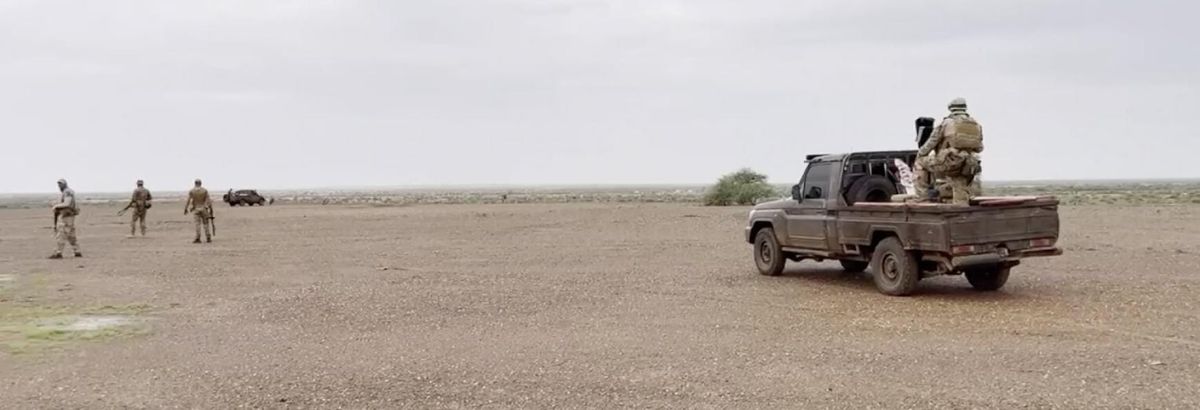
On 25 April 2026, fighters from the al-Qaeda-affiliated Jamat Nusrat al-Islam wal-Muslimin and the Tuareg-led Azawad Liberation Front struck Bamako, Kidal, Gao, Sevare and Kati simultaneously. Mali's Defence Minister Sadio Camara was killed by a suicide truck bomb at his residence in Kati. Russia's Africa Corps confirmed its withdrawal from Kidal, evacuating around 400 personnel under FLA escort and leaving heavy equipment, a downed helicopter and a drone operating station behind. Tessalit followed on 1 May, Agelok shortly after. On 28 April, JNIM declared a full blockade of Bamako and within two days had set up checkpoints around the capital. On 2 May, the prominent lawyer and government critic Mountaga Tall was abducted from his home in Bamako. On 4 May, Assimi Goïta appointed himself defence minister.
The architecture that governed the Sahel for a decade is gone. What has replaced it is a layered set of bilateral arrangements operating under no shared framework, with every major external actor competing for position simultaneously, on different terms, and the institutions that used to coordinate them either collapsed or formally seized but substantively empty.
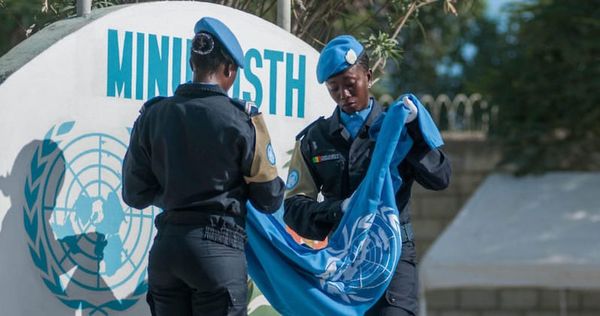
France's Operation Barkhane ended in November 2022, with the last troops out of Niger by August 2023. MINUSMA completed withdrawal in December 2023 on the junta's demand. The US closed Air Base 201 in Agadez, a $110 million drone facility, in 2024 after Niger revoked its military agreement. The G5 Sahel Joint Force collapsed in 2023. EUTM Mali ended in 2024. The 2015 Algiers Accord, the framework through which the UN, AU, EU, ECOWAS, France and Algeria had managed the Tuareg question, was terminated by Bamako on 25 January 2024.
Mali, Niger, and Burkina Faso have built a confederal architecture in the the Alliance of Sahel States (AES): Charter of Liptako-Gourma in 2023, Confederation Treaty in 2024, ECOWAS withdrawal completed in January 2025, Organisation Internationale de la Francophonie withdrawal in March 2025, an AES regional criminal court, planned ICC withdrawal, the Confederal Investment and Development Bank with 500 billion CFA francs of capital, and a 5,000-strong Unified Force launched in Bamako on 20 December 2025 and used in joint airstrikes after the April attacks. Russia took control of ex-Wagner networks through Africa Corps in mid-2025, with around 2,500 personnel in Mali, three major equipment convoys delivered last year, and visible capacity constraints from Ukraine and the loss of its Syrian logistics tail after Assad's fall in December 2025. Turkey has supplied Bayraktar TB2 and Akıncı drones to all three AES states since 2022, signed a defence cooperation agreement with Niger in summer 2025, and is deploying training battalions; SADAT, the Turkish private military company, is reportedly active in Mali. China has supplied Norinco MRAPs, SR5 multiple-launch rocket systems and surveillance infrastructure, on a lower volume than its commercial work elsewhere on the continent. Iran's defence minister visited Burkina Faso in February 2026, offering drones in exchange for resource access, with civil nuclear cooperation memoranda under discussion.
Beyond the security actors, the same pattern runs across diplomatic and commercial engagement. Morocco has pulled the AES landlocked states toward the Atlantic through the $1.2 billion Dakhla port; the AES foreign ministers visited Rabat in April 2025 and Mali has since endorsed Morocco's autonomy plan for Western Sahara. Algeria, on the other side of the Maghreb, mediated Africa Corps' negotiated exit from Kidal while continuing to compete with Morocco for Sahel alignment. Italy has presented the Mattei Plan as a coherent EU-southern engagement; the wider EU is divided on whether to lead, follow or supply selectively. The United States, having imposed an expanded travel ban on all three AES states in December 2025, then appointed Nick Checker as Senior Bureau Official for African Affairs in January 2026. He visited Bamako, Ouagadougou and Niamey across February and March, signed a $147 million health cooperation memorandum with Burkina Faso, lifted Russia-related sanctions on three senior Malian officials, and is reportedly close to a deal to resume US drone overflights of Mali. The framing is "trade not aid".
The previous architecture attached conditions to engagement: democratic governance, rights monitoring, peacekeeping presence, and the political space these conditions opened for civil society and political opposition. The new arrangements, across all international actors, largely strip those conditions. The Trump administration had previously been most insistent on conditionality but is now operating without it. Bilateral resource-for-security arrangements were not new in the Sahel. What the multilateral system added between 1990 and 2020 was the conditional layer that ran alongside them.
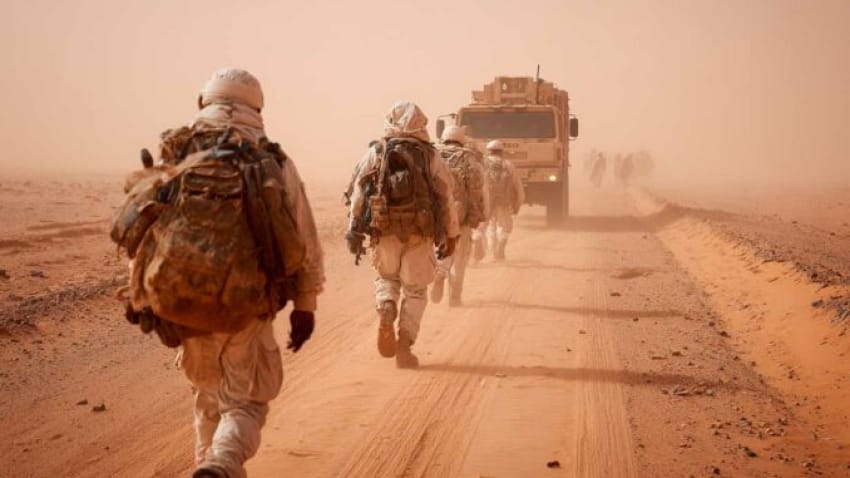
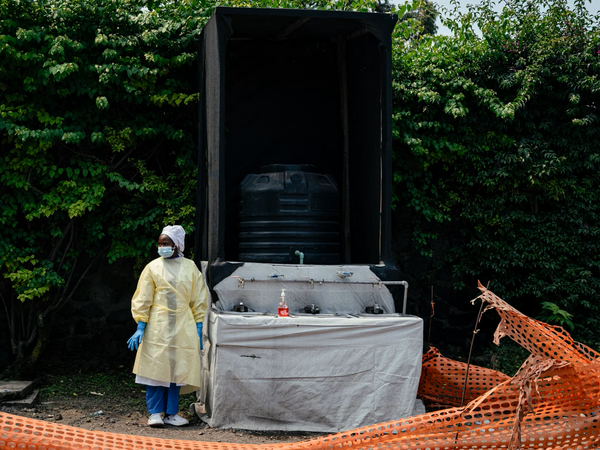
UNOWAS continues to brief the Council twice a year, its mandate was renewed in January 2026. The 18 December 2025 briefing covered the Bamako fuel blockade, refugee flows to Mauritania, the Benin coup attempt, the Guinea-Bissau coup, and the 12.1 million people the UK representative said would require humanitarian assistance in 2026. US, UK and Russian Council members contest the framing. Resolution 2719's financing pathway for AU-led peace operations is technically available but the AES sits outside the existing regional security architecture. The AU Peace and Security Council established a Sahel Task Force in September 2025. ECOWAS's Rapid Deployment Force of 1,650 personnel is expected to deploy in 2026; the AES Unified Force fielded three times that complement six months earlier.
The AES claim that the prior architecture functioned as a French and Western prop is not without grounds. The Confederation has built substantive institutions, including the BCID-AES bank, the regional court, the Faso Mebo expressway financed from local mining revenue, and an emerging Sahelian financial space outside the CFA franc zone. Whatever the current direction, the multilateral system is now struggling to engage and host on terms its participants accept. Human Rights Watch documented 1,800 civilian killings across 57 incidents in Burkina Faso between January 2023 and August 2025, with Burkinabe military and VDP forces responsible for more in 2025 than JNIM and ISGS combined. Under the prior architecture, a Council file, a peacekeeping mission and a treaty body would have surfaced that. The new arrangement has no equivalent on terms its participants accept.
Bilateral arrangements have become the entire architecture. Eventually this may produce a new conditional layer that could make multilateral coordination possible again. For now the institutions remain: UNOWAS will brief the Council in July, the AU Peace and Security Council will meet, ECOWAS will continue its Chief Negotiator track. But they are running through the motions of a process that no longer attaches to them.