The Humanitarian Reset
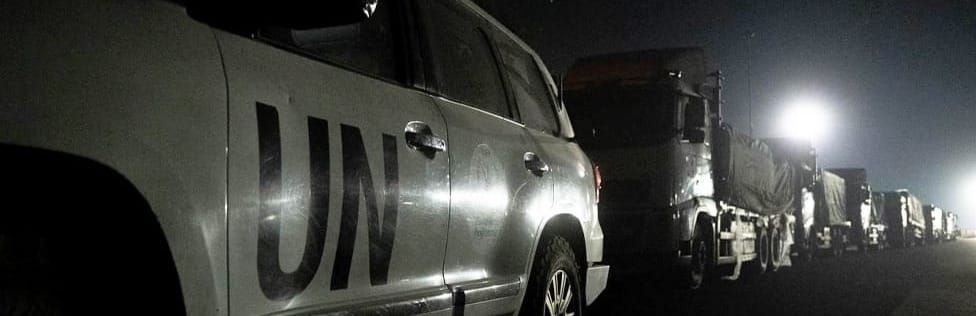
On 14 May the United States announced an additional $1.8 billion for the UN's humanitarian operations, channeled through the country-based pooled funds that the Office for the Coordination of Humanitarian Affairs administers. The contribution brings total US support since December to $3.8 billion across 21 countries, and builds on the Humanitarian Reset agreement the two signed in Geneva on 29 December. By the figures the administration released, OCHA disbursed funds at a record seven-day average, reached 21 million people in four months, and put a larger share of money through local organisations than the sector's prior average.
Country-based pooled funds are unearmarked by design. Donors contribute to a single fund and the Resident or Humanitarian Coordinator allocates it locally, against priorities set in the country response plan. The Reset narrows that design. US funding is geographically restricted and excludes Afghanistan, Yemen, and Gaza, along with climate-related response. US officials have described the country selection as a matter of need and "foreign policy", and have said that all US humanitarian funding will eventually route through this channel. In Myanmar, US money is 99.3% of the pooled fund. Such a fund is administered multilaterally and governed, in practice, by one donor. Regular earmarking directs a contribution within a shared instrument, this is more setting the terms of a pooled fund by reorganising the instrument around a donor.
The US has the most developed version of this kind of arrangement. It withholds the assessed channel, where regular budget arrears reached a record $1.57 billion at the end of 2025 and the Secretariat has warned the Fifth Committee of a mid-year cash shortfall, while expanding the operational one. The United Arab Emirates has pledged $550 million to the same model, which is already accustomed to funding bespoke and at scale. Germany, the Netherlands and the United Kingdom were the three largest contributors to UN inter-agency pooled funds in 2023, and built much of the flexible, collectively-governed model the Reset now reorganises. The same three are now cutting hardest, with European aid falling by its largest margin since records began in 2025 and the EU routing what remains into Global Gateway. China pays its assessed contributions, the second-largest share, and has never funded the discretionary system at scale.
These are different strategies suiting different interests, they're not converging on a new model. Traditionally major funders were member states that paid into collectively-governed channels and accepted collective governance of how the money was used. The pooled fund was built to recover some coherence from a system drifting toward bilateral earmarking. The Reset reverses this, setting the mechanism itself to a single donor's terms.
This may change some of the delivery of relief. Bilateral funding directed to chosen crises can move faster than money negotiated through collective governance, and the Reset's early figures show it. What narrows is the function that a decade of humanitarian-development-peace reform to stop treating relief as an end in itself and connect it to durable settlement. Converting humanitarian presence into political transition has been uneven and thin, but it was learning and strengthening the UN's role in accompanying countries into sustainable peace. This explicit commitment, through collectively-governed channels, gave domestic political processes a backstop and international structure to build on.
A system of patron-based funding risks that foundation: relief only in the crises the funder selects, and potentially less of the slow work of turning humanitarian presence into the political and economic engagement that prevents a recurrence of war. However, a single bilateral donor may, in cases, be more invested in an operation than a diffuse coalition, more exposed politically and more committed economically and operationally, with resourcing depth a coalition assembled from shrinking budgets cannot match. The development system is shifting towards bilateral strategic stakes of this kind. How the humanitarian system navigates between shallow transactional engagement and narrower but durable commitments, will play out differently across contexts, steered by what states, agencies and recipient governments do inside this reset system, and how well they can navigate what remains of the 'HDP nexus' without a clear unifying mechanism.
Neutral convening and collectively-owned settlement processes will be harder to run through these bilaterally funded channels. But other openings might appear: recipient governments negotiating with an identifiable funder rather than a coalition, agencies operating assessed and patron-funded mandates in parallel, members organising around the crises a donor's selectivity leaves uncovered. The UN has worked through changes in who funds it before. It will need to map how the settlement, prevention and the political work that humanitarian relief was meant to enable will be pursued where its largest funders engage as patrons rather than as members.