What can the UN actually do with AI?
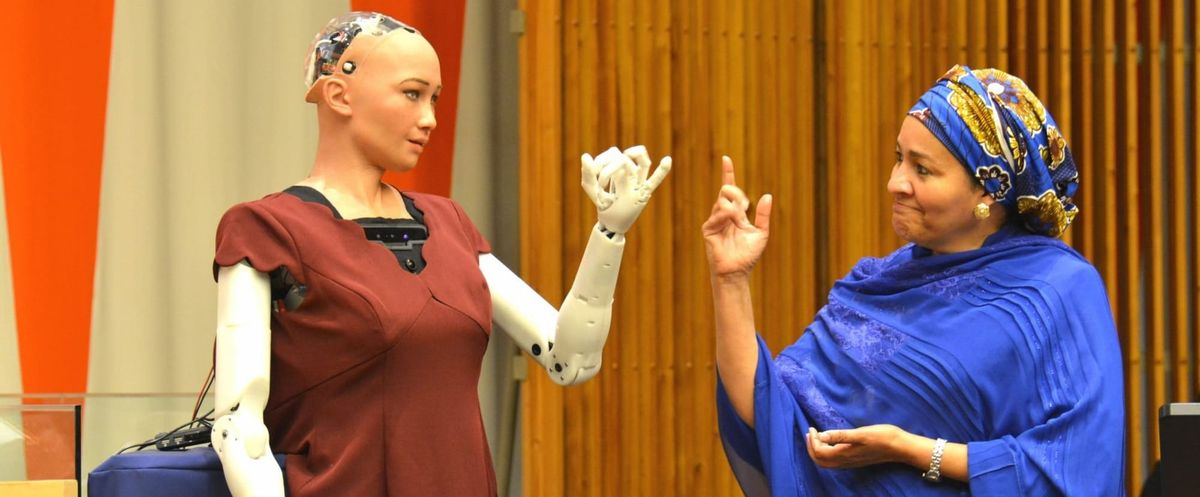
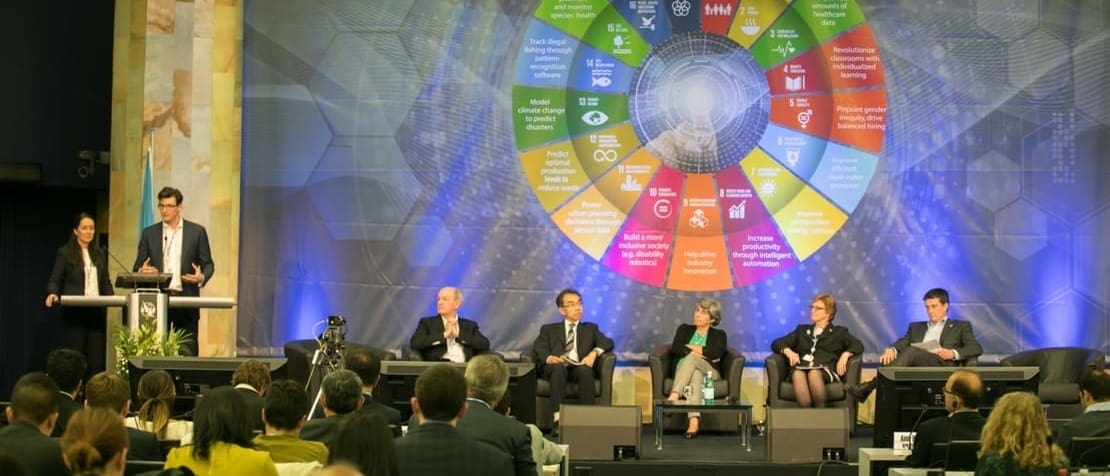
The inaugural UN Global Dialogue on AI Governance meets in Geneva on 6 and 7 July, immediately followed by the seventh AI for Good Global Summit running through to 10 July. More than 50 UN agencies are partners, and the recently appointed Independent International Scientific Panel on AI reports into the Dialogue. It is the most visible expression so far of the UN's role on artificial intelligence. For now that role is focused on governance: convening states, setting norms, and building the architecture through which AI might be steered multilaterally.
The Office for Digital and Emerging Technologies was only established in January 2025 to coordinate the system's digital and AI work and carry forward the Global Digital Compact. The Panel and the Dialogue were mandated by the General Assembly in August 2025, the Panel seated in February 2026 over a US objection that the vote be recorded. The Dialogue runs on a joint secretariat of ITU, UNESCO, ODET and the Executive Office of the Secretary-General. On governance, the UN has built institutions, secured mandates, and given itself a standing place in the calendar.
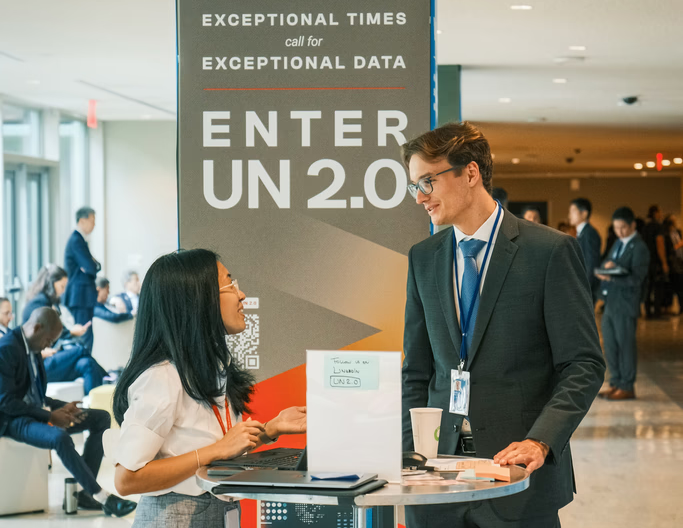
The UN's capacity to use AI in its own work is not as visible. That effort sits inside UN 2.0, the SG's internal modernisation agenda. Its targets are set under the Pact for the Future for the end of 2026: 100% of strategic plans and 35% of programme plans to reflect innovation, data and digital priorities; 70% of senior leaders to carry digital objectives in their performance compacts; 15% of new hires in dedicated data and digital roles, and 55% of new job profiles to require basic digital skills. The targets track whether AI is being written into plans, compacts and job descriptions. ITU recorded 729 AI projects across the system in 2024, up from 406 the year before, most of them producing software tools or reports and most still ongoing. The policy brief that set out UN 2.0 is explicit that its aim is to shift existing capacity rather than add new capacity, and that stronger technical tools alone will not deliver the change it envisages.
How the system as a whole might deploy AI strategically though is still an open question. The High-Level Committee on Management's task force on AI reported in late 2024 that the decentralised structure of the UN leaves agencies building their own solutions in isolation, duplicating effort and missing shared opportunities. The same picture shows up in UN 2.0's own reporting: by its account only around 40 per cent of UN entities feel able to support Member States well on digital, advanced expertise is scarce, and the system describes itself as in the early stages of its digital transformation. The UN80 reform agenda carries the same recognition into infrastructure, proposing a shared Technology Accelerator Platform and a system-wide data commons. Both depend on member states adopting them and significant, coordinated action from the agencies and secretariat at scale.
Member states have so far been more comfortable backing the UN's convening and norm-setting role than resourcing it to operate. The AI for Good Summit is funded by national technology ministries and by major technology firms. The US objected to the Scientific Panel as overreach and pressed the institution to focus on core missions, while the G77 backed it as a forum for developing-country inclusion, but both accept a UN as convenor for AI dialogue and frameworks.
The substantive work on AI, meanwhile, is being built quickly and largely outside the UN. France runs the Albert assistant across its public administration; Finland built AuroraAI; Saudi Arabia's sovereign fund stood up HUMAIN; Latin America launched Latam-GPT; India created the IndiaAI Mission and, in February, convened the first AI summit held in the Global South, which the Secretary-General attended as a guest rather than as host. Much of the moral argument is being made outside the institution too. Six weeks before Geneva, Pope Leo XIV's first encyclical set out stakes the Dialogue exists to address: that control of data cannot be left to private actors alone, and that emerging AI monopolies are concentrating epistemic, economic and political power. The UN is well placed to take an articulation like that, alongside the work of its own Scientific Panel, and build from it a secular, rights-grounded position that a multilateral system can stand behind. That is one of the things the Global Dialogue could be for.
There is a further question that the calendar and the targets leave largely untouched. The UN engages AI today in three ways:
- as an efficiency problem through the UN 2.0 targets;
- as a normative problem, through the Dialogue and the Panel; and
- as a development tool, through the SDG-linked projects, in the ITU's count.
A strategic reading would sit across all three. It would ask whether the UN can use AI to do its own work better, faster and more coherently: across thematic areas, across levels of government, and across the development, peace and security, and human rights pillars the system is organised around. Three lines of enquiry seem worth taking seriously at that level. They are not the only ones, and none is a recommendation. Each is a choice the system is not yet structured to make.
- Delivery. The UN's claim to a distinctive role at country level rests on working across sectors, across levels of government and across a wide partner base in ways no single agency or consultancy easily matches. In practice that integration tends to happen when it is deliberately designed in rather than as a matter of course. What is worth examining here is the connective layer: not just another chatbot, but retrieval across a country's full document and data history, so that a response draws on what the system already holds rather than on what one officer happens to recall; structured assembly that pulls a programme's threads, partners and prior commitments into a first integrated draft for people to work from and improve; drafting calibrated to the register a particular counterpart or donor expects. The places this would matter most are the hardest: large transition-country programmes, settings where humanitarian, development and peace work have to run at once, integrated climate and rights work at scale. RC offices and Country Teams in those settings may be able to test whether it holds up.
- Coordination. The system holds an enormous amount of information, country data, programme records, evaluations, situation reports, spread across dozens of entities and rarely usable as a whole. The question worth exploring is whether that body of information could be made queryable as a single resource: a layer over the system's evidence base that lets a common country analysis, a joint humanitarian-development assessment or a cross-pillar financing picture be assembled from across agencies rather than from one office's reach; classification and extraction that turn thousands of evaluations and reports into something searchable by question rather than by filename; pattern detection across situation reporting that surfaces warning signs earlier. This is not the decades-old call for better data-sharing, which has produced mostly compliance. It is a question about analytical capability, about whether the work the system already does to coordinate itself could rest on something stronger than person-hours and partial evidence. The authority questions, whose mandate, whose budget, whose call, do not change with technology. The quality of the analysis underneath them could.
- Pace. The UN's analytical and normative output, its briefings, country positions, comparative analysis, policy options and the support it gives to negotiations, increasingly sits alongside the work of national administrations, international financial institutions, foundations and private analysts whose capacity is growing fast. What is worth weighing is whether AI could help the system keep up and keep its analysis wide enough: comparative work that sets a draft position against what others have already published; rapid synthesis of evidence and precedent into briefings and options at the speed negotiations actually move; assessment that holds climate, security, rights and financing in one frame rather than four separate ones. The risk is less that anyone formally takes the UN's normative role away than that its contributions arrive late, narrower than the debate has already moved, and unable to integrate across the pillars the questions now span.
These lines of enquiry are becoming more viable as the underlying technology improves, and two shifts in particular are worth the system's attention.
- The first is the growing ability of AI models to work over very large and varied bodies of material across sustained tasks, rather than in single short passes, which is what the coordination question above would demand.
- The second is a steady improvement in how these systems express uncertainty: a model that flags the limits of what it knows, rather than asserting past them, is a different proposition for an institution whose authority rests on the reliability of what it puts its name to. Both are incremental rather than finished, and both are moving quickly enough that the distance between what the system could do with AI and what it is currently organised to do is widening.
None of these is currently being openly weighed as a strategic choice. The question is split across the efficiency targets, the governance architecture and the project count, each held by different parts of the system. Capability grows from the initiative of individual offices and teams, and the decisions that would determine whether any of it adds up to system-wide capacity are not yet being taken at a system-wide strategic level. UN 2.0 and the Pact for the Future, which might have provided that strategic frame, are by now mostly read as compliance exercises, when they are read at all. The funding squeeze that helped produce this pattern is also the strongest argument against it: a system cutting this deep can least afford to run its AI effort as a box-ticking exercise.
None of this takes anything away from the AI work already under way across the system. When UN 2.0's founding brief illustrates what digital tools can do inside the institution, one of its examples is the automated drafting and formatting of documents. The chatbots, copilots and document tools being rolled out are useful, and they will keep spreading. It still remains unclear what they could and should add up to.
There are more specific questions the current targets do not touch:
- which layers of the system's work AI should sit in?
- how tools built in different agencies could interoperate rather than duplicate?
- what evidence needs to be assembled deliberately, as a shared resource, rather than gathered case by case?
- how procurement, data protection and risk are handled at the system level rather than worked around one project at a time?
- which institutions are equipped to hold these questions strategically rather than technically?
Geneva will show the UN at its most capable on AI: convening states, framing the questions, building the institutions of governance. The system's own operating question is on the programme too, in an invitation-only forum of UN information officers on the final day, away from the main stages. The harder test is whether the system can build the capacity to do its own work at the scale and speed its governance role implies, and whether its leadership treats that as a strategic choice before its Member States' own digital architectures leave the UN behind.