How can the UN coordinate a development system of strategic competition?
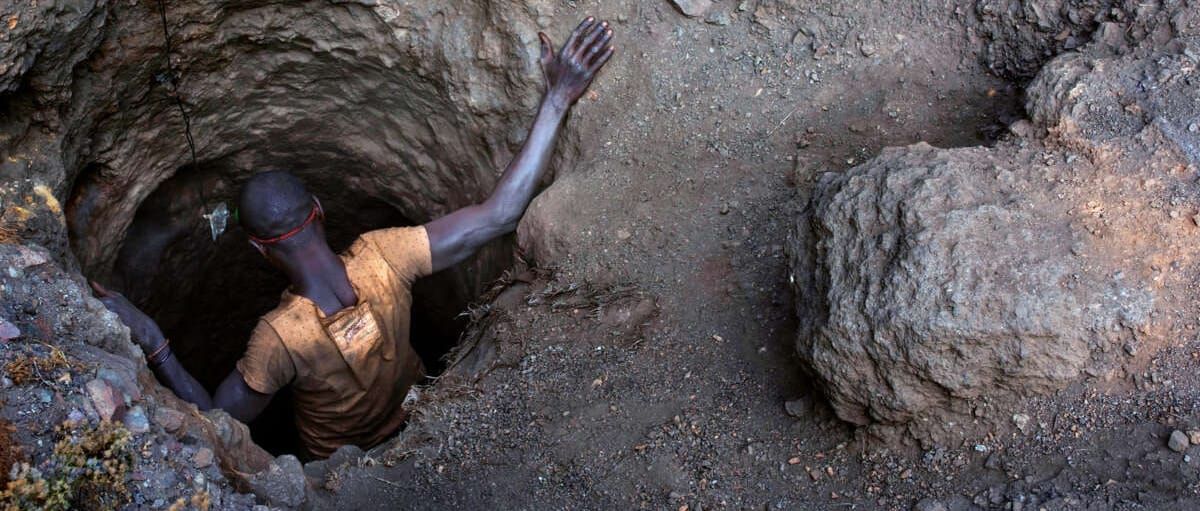
Two months ago, USG Rosemary DiCarlo briefed the Security Council on critical minerals. Trade in raw and semi-processed minerals reached approximately $2.5 trillion in 2023, more than 10% of global trade. Demand could triple by 2030 and quadruple by 2040. More than 70% of global cobalt extraction occurs in the Democratic Republic of the Congo. Myanmar is a major source of rare earths. Ukraine holds significant titanium and lithium reserves. The mineral demand surge, DiCarlo noted, is fueling geopolitical competition that "could lead to conflict if not governed responsibly."
The competition is no longer an 'emerging' dynamic. In February 2026, the US held its inaugural Critical Minerals Ministerial Summit, signing eleven new bilateral frameworks and launching the Forum on Resource Geostrategic Engagement (FORGE) as the successor to the Minerals Security Partnership. Project Vault, announced the day before the Ministerial, established a $12 billion domestic strategic reserve backed by a $10 billion EXIM Direct Loan, the largest in EXIM's history. The US government has mobilised over $30 billion in letters of interest, investments and loans for critical minerals supply chains in the previous six months.
The EU approved 60 Strategic Projects under the Critical Raw Materials Act in 2025, including 13 outside the EU, and now holds 14 Strategic Partnerships with non-EU countries. The agreements emphasise "regulatory alignment" and the Global Gateway provides the financing vehicle. China's overseas mining investment under the Belt and Road Initiative reached a record $32.6 billion in 2025, with 61% directed to processing facilities. Gulf sovereign wealth funds, with combined assets of around $5 trillion projected to reach $7 trillion by 2030, have expanded into African mining, ports, and energy infrastructure, including over $50 billion in Africa investments by 2023.
Each major power is structuring development partnerships as bilateral, asymmetric strategic resource access. Africa retains only 15% of mineral value generated on the continent, holds 0.5% of global patents, and has seen manufacturing decline from 15% to 11% of GDP. Indonesia's nickel export ban and Namibia's restriction on unprocessed mineral exports indicate the policy direction programme countries are attempting. Whether such moves can be sustained against the combined leverage of major powers competing for access is the question shaping development outcomes.
The coordination challenge for the UN development system has changed shape. The 2018 Resident Coordinator reform and the 2024 recalibration addressed coordination among UN agencies and traditional donors. The deals reorganising country economies are not channels RCs coordinate. UNDP is positioned as the UN system integrator working across international financial institutions, private sector, and partners beyond the UN. The shift responded to the realisation that coordination of UN operational activities is no longer the question that determines development outcomes.
The UN system has begun adapting to the new dynamic. The Secretary-General's Panel on Critical Energy Transition Minerals reported in 2024. A UN Task Force on Critical Energy Transition Minerals launched in December 2025, co-chaired by UNEP, UNDP, and UNCTAD. UNDP is developing an Africa regional flagship, "Avoiding the Asymmetry of Leverage", as part of the new Regional Programme Document. UNCTAD has worked on value addition strategies in Madagascar and Namibia. UNEP issued guidance in June 2025 on mineral governance across the value chain. The institutional response is being put together fairly quickly.
Coordination is necessary but may not be enough for what programme countries are actually facing. Developing countries weighing competing offers from major powers need normative frameworks, regulatory capacity, and institutional support to maintain bargaining position. They need access to information about comparable deals, technical capacity to assess them, and legal infrastructure to negotiate them. They have always needed this but this intensification of strategic competition makes the asymmetry of leverage harder to navigate, and the consequences of getting it wrong larger. This is the role only the UN system can play, but it is not the role UN80 and FfD4 are organising it to perform.
The UN80 mandate review is limited to "system-level coherence" and excludes adapting mandates to new geopolitical realities. The Sevilla Commitment delivered through the FfD4 outcome includes important provisions on tax transparency, the UN Tax Convention process, and the Borrowers' Forum on debt. It offers nothing that strengthens developing countries' negotiating position against bilateral strategic deals. The US walkout left an agreement reliant on the old multilateral model, attempting to address a new structural dynamic with tools designed for a previous one.
The practitioners on the ground see what is happening. The question is whether Member States will give the System the tools and authority that developing countries need to navigate strategic competition, without being reduced to resource suppliers or forced to choose sides between major powers competing for what they have.