Post-2030
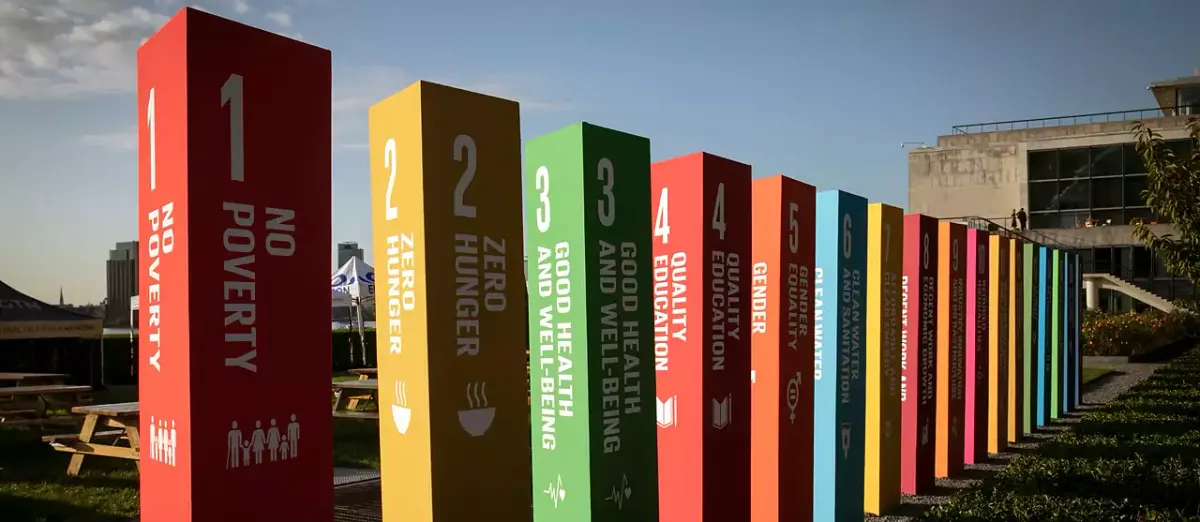
On 4 March 2025, the United States told the General Assembly that it rejected and denounced the 2030 Agenda for Sustainable Development. The statement, made during a vote on a resolution about peaceful coexistence, called the Sustainable Development Goals a programme of soft global governance inconsistent with American sovereignty, and said the United States would no longer reaffirm them as a matter of course. Little changed on the ground. Of 193 member states, 190 have submitted at least one Voluntary National Review of their progress against the Goals; the United States is one of three, with Haiti and Myanmar, that never has, and the only one of the 20 principal OECD-DAC donors that never built the Goals into the policy guiding its development spending.
The Goals offered a shared language for development, broad enough that 193 governments, as well as companies, organisations and agencies, could adopt it. They carried no binding obligation, and the High-Level Political Forum that reviews them rests on the motivation of peer pressure rather than enforcement. What they gave was a common set of terms in which almost any government could describe what it was already doing, relating work across different countries and contexts into a shared framework.
The US objection was with that language. The Goals carried a globalist worldview, built around gender and climate, that American voters had turned away from. The language was the only part of the framework that had asked anything of Washington in the first place. When its largest contributor declares the 2030 Agenda's shared vocabulary as ideology, its value in letting all governments mean roughly the same thing when they said 'development', was weakened.
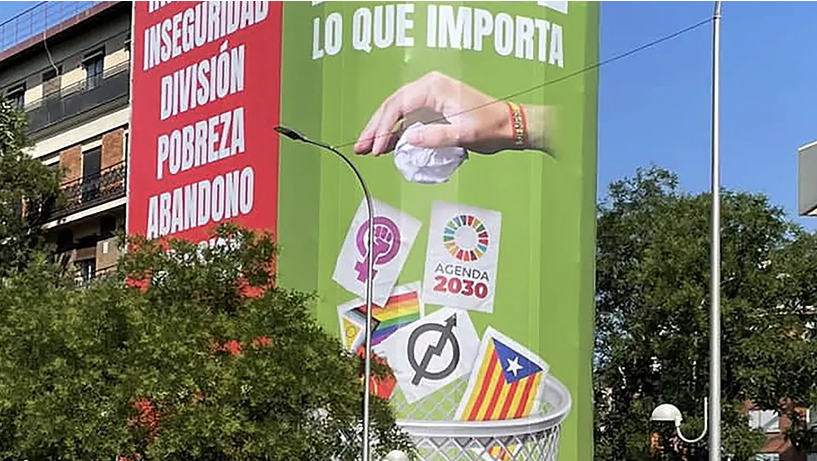
But the word had been drifting for some time. China has been building a parallel vocabulary around development. The Global Development Initiative, which Xi Jinping launched at the General Assembly in 2021, casts development as the master key to every other problem, claims alignment with the 2030 Agenda, and runs through Chinese institutions and framing; in September 2025 Xi added a Global Governance Initiative, carrying the same approach from development into the architecture of global governance. The G77 has been pressing the other way, toward obligation. A draft Covenant on the Right to Development, which the Human Rights Council sent to the General Assembly in 2023 on a divided vote of 29 to 13 with 5 abstentions and which remains under negotiation, would recast development as a binding entitlement owed by wealthier states to poorer ones, a shift richer governments have resisted for years, worried that a binding right to development would become a right to almost anything. Even the European Union's Global Gateway, launched in 2021 to answer the Belt and Road, has slid from the language of development toward the language of connectivity and economic security, its rights-based spending under pressure in the midterm review of its own budget.
The same word now points in multiple directions at once: refused as ideology in Washington, answered with a parallel framework from Beijing, pressed toward binding obligation by the G77. Any goal and indicator written under such a term can be read differently by each government that adopts it.
Preparation for what comes after 2030 is under way. The successor negotiation opens at the SDG Summit in September 2027, under a mandate from the Pact for the Future, and is taking shape as a discussion of goals: how many, how measurable, how ambitious.
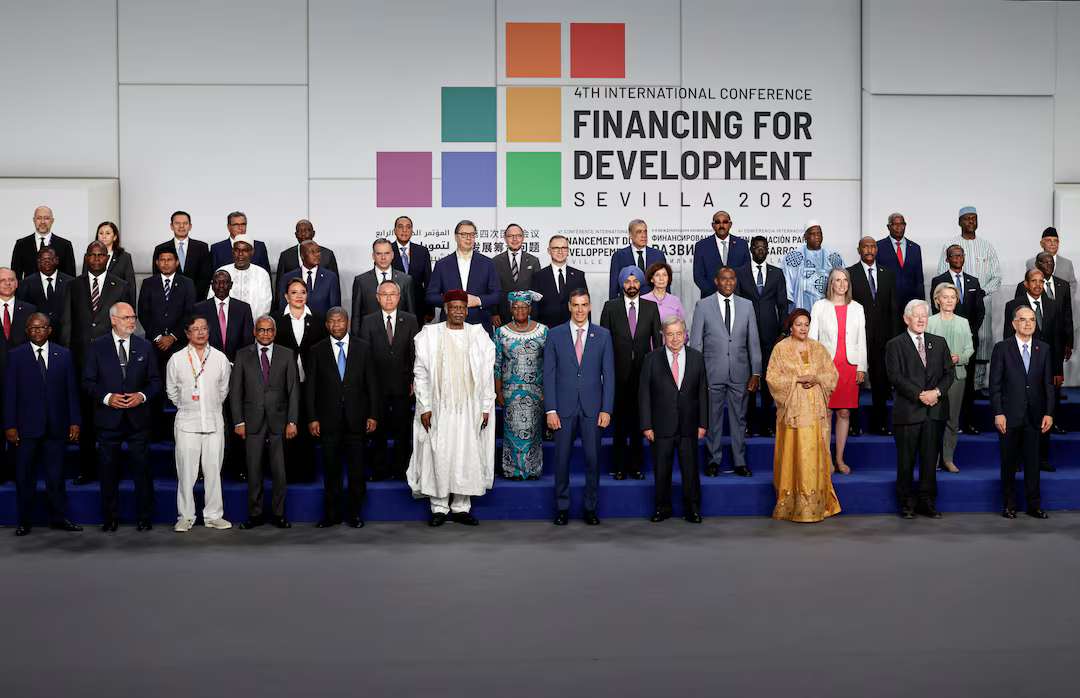
A common vocabulary for a workable universal framework is harder to find than it was in 2015. The narrower alternative, a framework built among governments that already share a language, is the direction the system has been drifting. The Fourth Financing for Development Conference, held in Seville in mid-2025, produced the Sevilla Platform for Action: 130 voluntary initiatives run by coalitions of the willing, among them a tax on high-net-worth individuals led by Spain and Brazil, a global public investment coalition, and a debt-pause alliance. The United States withdrew from the negotiations altogether and stayed away from Seville; the rest of the membership adopted the outcome by consensus without it.
The language was always loose: a phrase like sustainable development could be read one way in Brasília, another in Berlin and another in Beijing, and the universal promises of 2015 were never really meant to bind. The looseness was much of the point, since terms broad enough to mean different things to different governments were terms everyone could sign. The United States that denounced the Agenda in 2025 had adopted it, word for word, in 2015; the political turn of the past decade had changed what its words were taken to carry.
What is changing now is that those different readings are setting hard, each with institutions of its own behind it. The ambiguity that once held the framework together is working against it.
Beneath its targets and indicators, what the 2015 framework mostly did was hold a common vocabulary in place. A September summit can begin to negotiate goals more readily than it can restore the shared meaning behind them. The formal drafting that opens in 2027 can produce a document. Whether it also produces a renewed shared language, or simply a word that several governments can use for several different projects while appearing to agree, is a harder thing to arrange.