Whose Secretary-General?
Russia convened the five permanent Security Council members in October to draft the joint letter that formally launches the selection of the next UN Secretary-General. The P5 agreed on a text modelled closely on the 2015 letter and presented it to the ten elected members as something close to a fait accompli.
Denmark, coordinating the E10 members, pushed back. They wanted the letter to reference independence, political leadership, and commitment to multilateralism and international law as qualities of the next Secretary-General. The P5 rejected all three, as well as "predictability" as a guiding principle, blocked a nominations deadline that would bind the Security Council, and opposed any reference to the General Assembly having "deliberative" power in the selection.
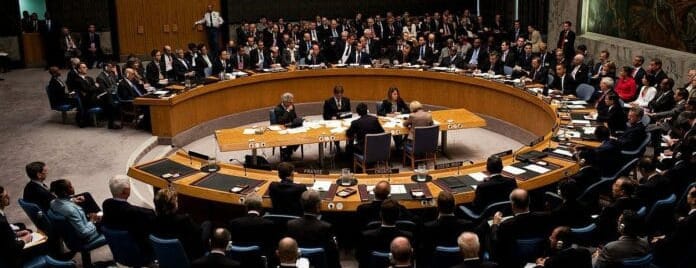
The E10 did secure language on regional diversity, encouragement to "strongly consider nominating women" (over US objections), and disclosure requirements aligned with General Assembly resolution 79/327. But the letter signed on 25 November stripped the E10's references to independence, commitment to multilateralism and international law. Russia cannot afford a SG with political capital on Ukraine. China does not want one with authority on human rights. The United States, under its current administration, needs a SG who will not complicate unilateral action on sanctions, economic coercion, or the AI and technology governance agenda where the UN is one of several venues Washington is trying to shape. France and the UK, nominally supportive of a stronger multilateral system, will not spend political capital to override the other three.
NYU's Center on International Cooperation argued that the 2026 selection will signal whether Member States expect the UN to act as a norm-setter, convener, or intermediary, and that the tension between political vision and managerial effectiveness will define the choice. The joint letter negotiations suggest the P5 have already resolved this tension and want a manager to preside over the implementation of the Global Digital Compact, the UN's expanding role in AI governance, UN80 reforms, and a fiscal crisis that gives the largest contributors additional leverage over institutional direction. A Secretary-General with independent political authority would complicate all of this.
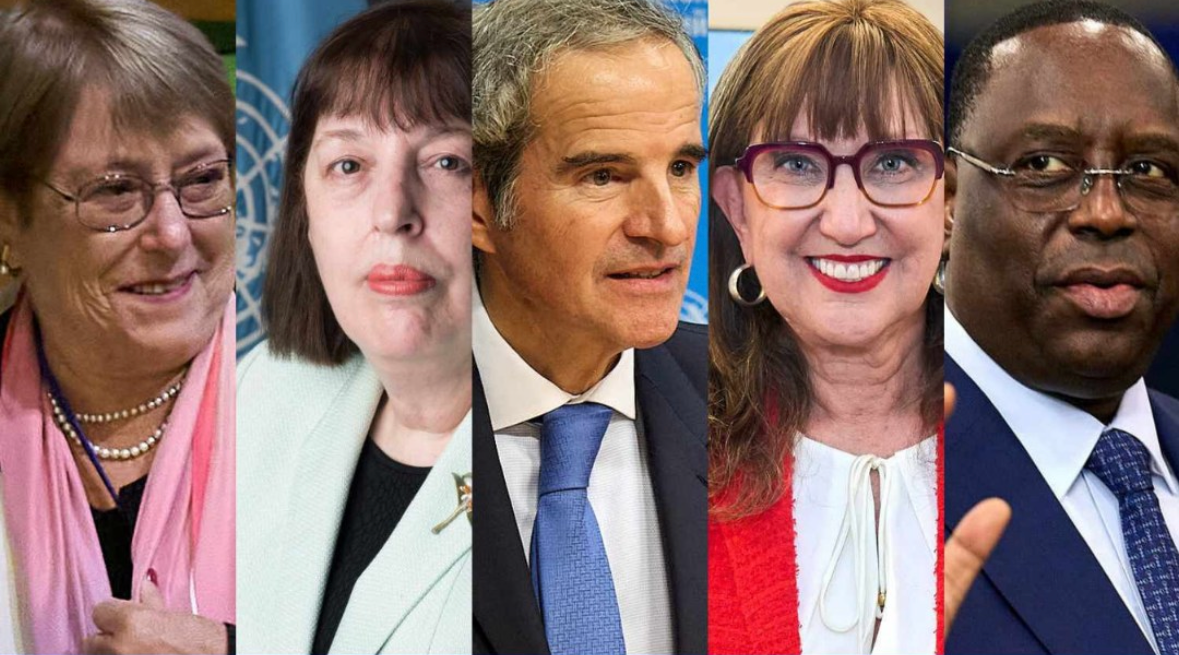
Five official nominees as of late March: Rafael Grossi of Argentina (IAEA Director General); Rebeca Grynspan of Costa Rica (UNCTAD Secretary-General); Michelle Bachelet of Chile (former president, former High Commissioner for Human Rights); Macky Sall, former president of Senegal, nominated by Burundi; and Virginia Gamba of Argentina (former SRSG for Children and Armed Conflict, nominated by the Maldives).
Grossi reads the UN's crisis as a failure of active diplomacy and conflict prevention. For Grynspan it's a failure to connect trade, development, and crisis response. And Bachelet largely views it through rights and accountability. They signal different institutional priorities of where the Secretary-General's political capital should be spent.
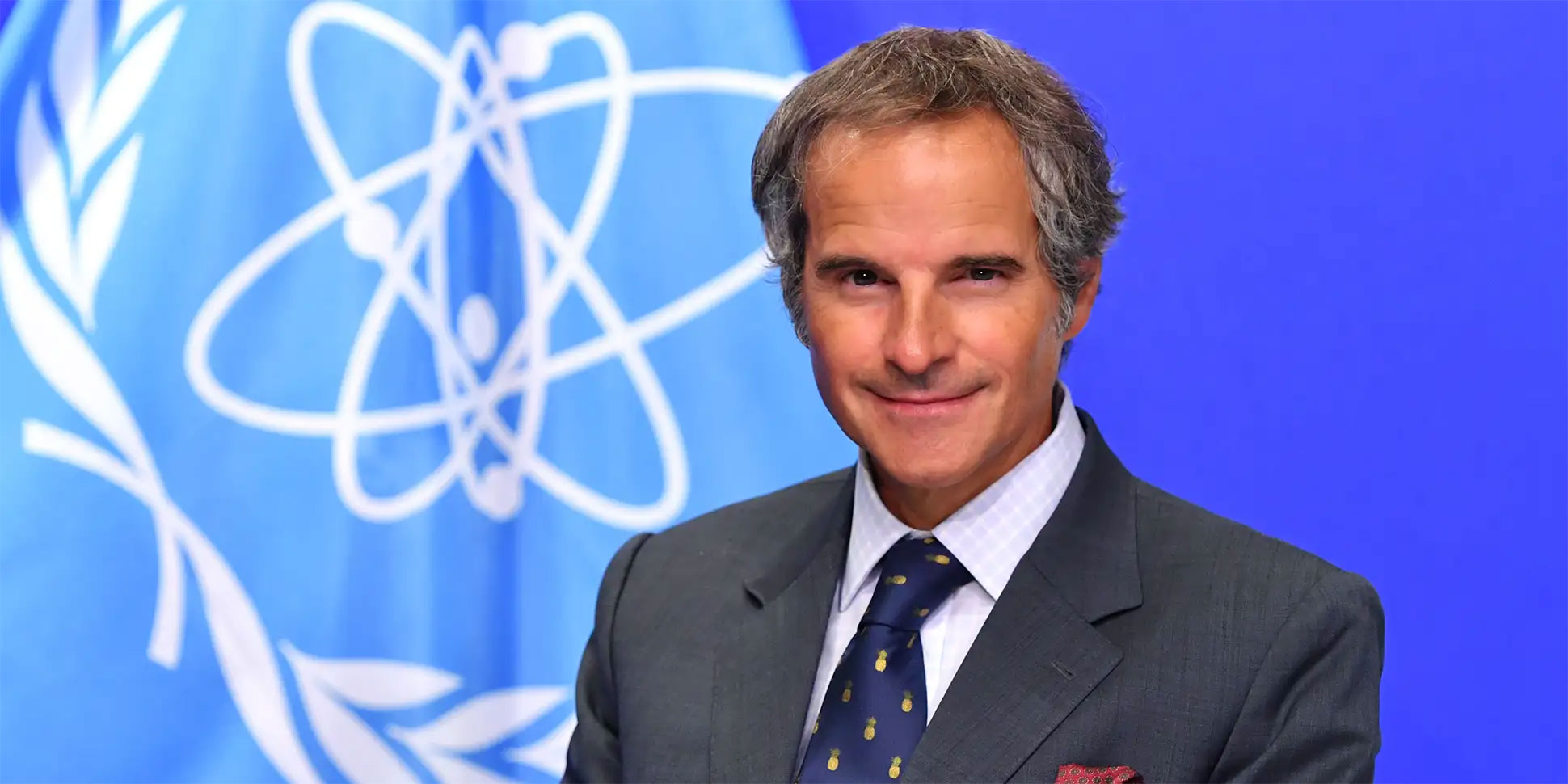
Through his IAEA role, Grossi has the most direct P5 relationships: he has met with Rubio, Lavrov, and European counterparts in recent months, while still serving as Director General. His profile is security-and-verification focused: Zaporizhzhia, Iran's nuclear programme, the broader question of whether technical UN bodies retain credibility under great-power pressure. He has positioned himself as someone who will make the UN more active. His authority at the IAEA rests more on technical credibility than political capital. Whether that translates to the SG's role is an open question, and his close engagement with Washington creates exposure that the straw polls will test.
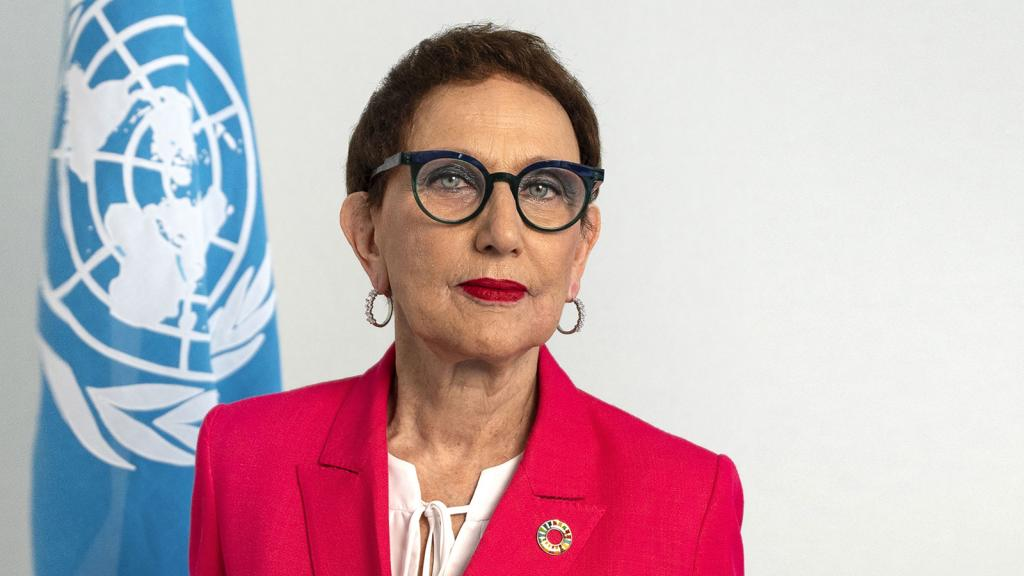
Grynspan led one of the two UN Task Forces behind the Black Sea Grain Initiative in 2022 to facilitate Russian food and fertiliser exports to global markets, negotiating directly with Moscow at the height of the war with Ukraine. The initiative enabled the safe export of over 33 million tonnes of grain and contributed to a 23% reduction in global food prices. Before UNCTAD, she was UN Deputy Secretary-General, UNDP's Associate Administrator, its Regional Director for Latin America, and Vice President of Costa Rica.
Grynspan operated across competing spheres: humanitarian, trade, and geopolitical. She worked within Russian interests (facilitating their exports) to serve a humanitarian objective (feeding vulnerable countries), where the formal multilateral architecture was stuck. That may signify a more discrete political agency that could serve the office of Secretary-General in the current environment. Costa Rica as a nominating state doesn't carry much geopolitical baggage for the P5. Her development framing may offer a path to Chinese/G77 support that Bachelet's human rights profile may not.
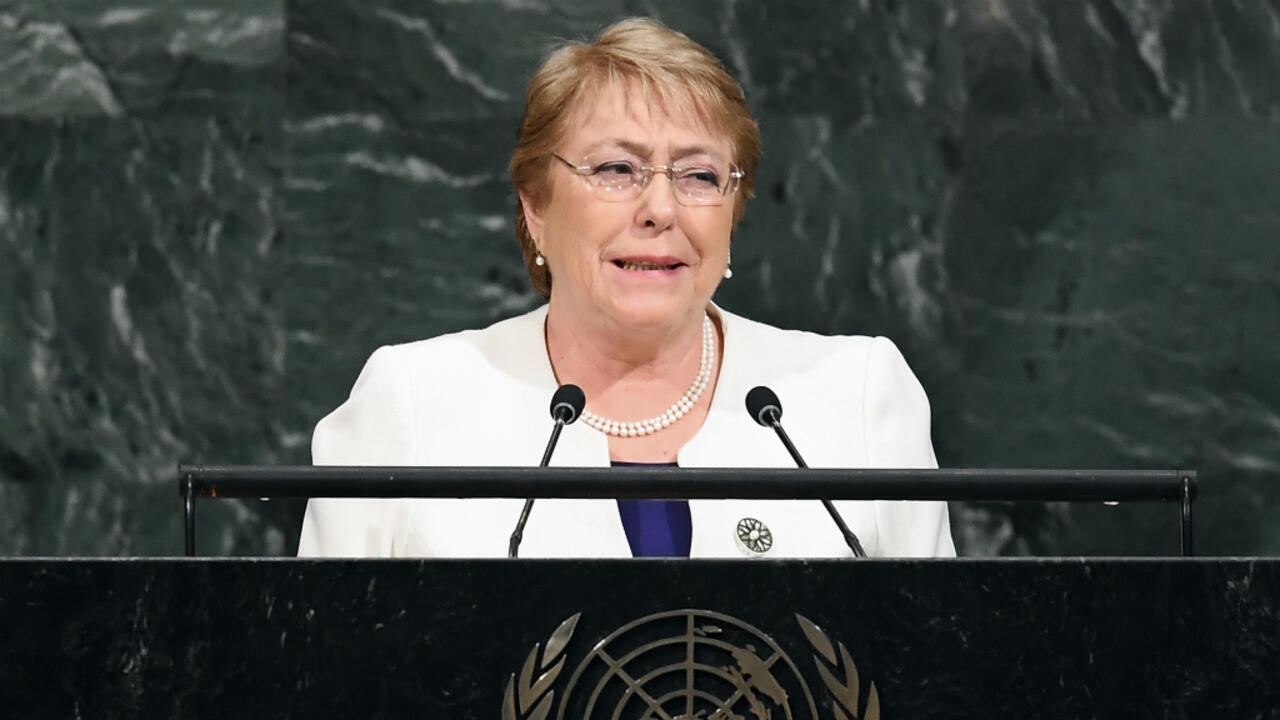
Bachelet does have a stronger set of credentials: two-term head of state, the first head of UN Women, and High Commissioner for Human Rights. She is also exposed on her work on human rights and position on abortion rights. And Chile's new hard-right president just withdrew Santiago's backing, a candidacy nominated by his left-wing predecessor just seven weeks earlier. She continues with Brazilian and Mexican support. Bachelet represents most clearly what the E10 tried to put in the joint letter on independence and commitment to international law.
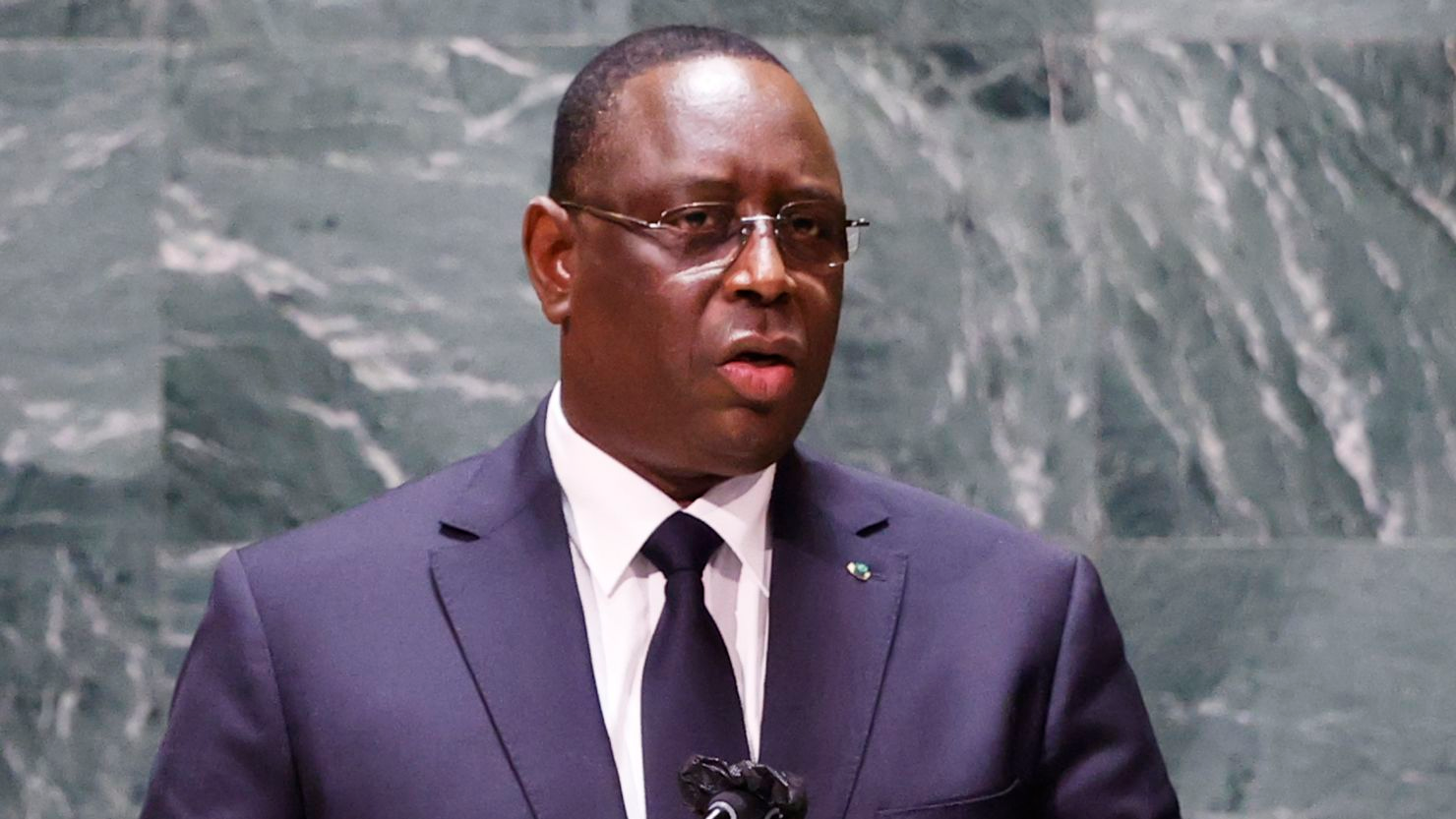
Macky Sall, former president of Senegal and former chair of the African Union, is nominated by Burundi. Sall hosted the 2022 Russia-Africa summit and has maintained relationships across the geopolitical spectrum: with Moscow, with Western capitals, and within the African bloc. If the GRULAC candidates fragment badly enough, an African compromise becomes conceivable. His profile is closer to the traditional SG template as a former head of state with continental diplomatic network but no overriding alignment.
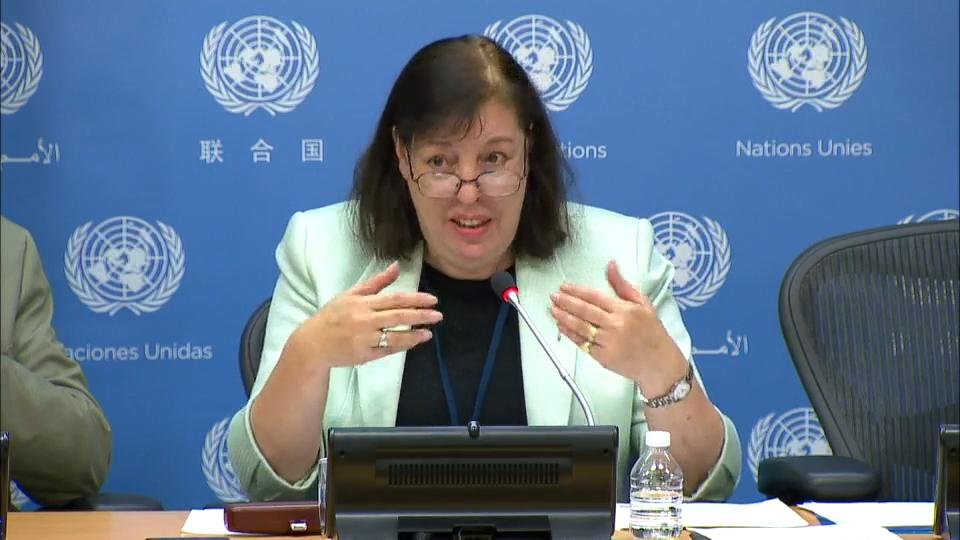
Virginia Gamba is harder to read. A second Argentine nominee, she was Guterres's Special Representative for Children and Armed Conflict from 2017 to 2025, a specialised normative mandate with limited operational scope. The Maldives, not Argentina, nominated her, suggesting maybe a strategic purpose (possibly fragmenting Argentina's influence, keeping an additional woman in the field, or positioning Gamba for a senior Secretariat role under whoever prevails). She seems unlikely to survive the straw polls, but could influence the voting calculations for the other candidates.
Next month, these candidates will appear before the General Assembly for webcast interactive dialogues, vision statements, questions from member states, financial disclosures etc. But then the decision will be made by the Security Council's closed straw polls.
The E10, the General Assembly, and the candidates themselves are navigating a narrow channel. A Secretary-General who is entirely dependent on P5 backing will manage the institution into irrelevance: administering budgets and implementing reforms to weaken mandates and capacity. A Secretary-General who is pushed through over P5 objections, or who enters office as a combative figure, will produce gridlock and retaliation in the Security Council, the Fifth Committee, and the funding architecture, exacerbating its crises.
Ideally, one of these candidates can be acceptable to the P5 without being owned by them, and also has the institutional fluency to manage the UN across its competing power dynamics and spheres: the diplomatic capacity to channel genuine consensus between members whose interests diverge, and the political intelligence to advance and transform the institution within the tolerance levels of the P5. That is a very specific set of qualities but this candidate field may contain someone who possess them. The question is whether a process designed around P5 vetoes can select for these capacities that only become clear once the vetoes are over.